Gwanaksan Mountain
Gwanaksan Mountain
4.1km from APAP Artwork Tour (Anyang Public Art Project)
관악구 관악로 대학동 일대
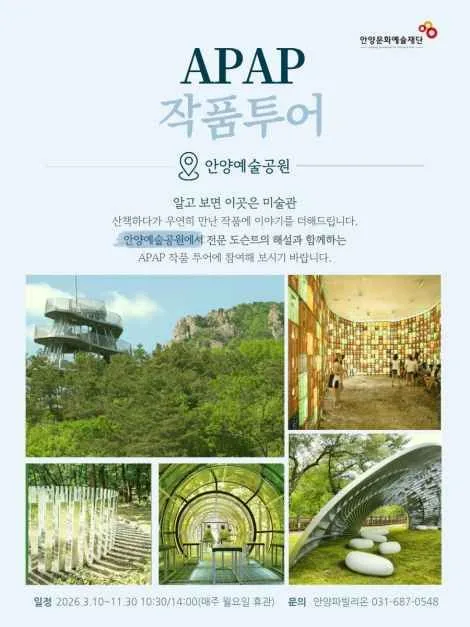 Great with this festivalAPAP Artwork Tour (Anyang Public Art Project)
About
Gwanaksan Mountain (632.2 m), rising south of the Han River in Seoul, got its name, Gwanaksan, because the rocks at its summit look like a person wearing a gat (traditional hat). When Gwanak-gu was separated from Yeongdeungpo-gu in 1973, the mountain's name became the name of the district. It was designated an urban natural park in 1968, and today it is a Seoul landmark and resting place that many Seoul citizens love to visit. With rocky peaks exposed here and there blending with deep valleys to form rugged mountain scenery, Gwanaksan is close to the city center, so anyone can climb it in a day. In spring cherry blossoms bloom fully near the entrance to Gwanaksan, and when azaleas bloom an azalea festival is sometimes held. The dense green of summer, the majestic sound of water at Dongpokpo (East Falls) and Seopokpo (West Falls) deep in the valley, the autumn foliage and the snowy scenes of winter show off the character of famous Gwanaksan. At the summit, it is said that when King Taejo Yi Seong-gye chose Seoul as the capital, he built two temples, Yeonjusa and Wongaksa, to counter a fire-related (hwaje) threat, and there are large and small temples and hermitages including Wongaksa and Yeonjuam at the top. Yeonjudae, perched on a perilous cliff, is where all of Gwanaksan's hiking trails converge. Gwanaksan has a barrier-free forest trail course, and there are also many hiking trails. The representative trail starts at the Seoul National University entrance in Sillim-dong, Gwanak-gu, and there is also a route going up behind Gwacheon Middle School in Jungang-dong, Gwacheon-si, Gyeonggi-do.
Visitor info
- Contact
- Gwanak-gu Leisure City Division 02-879-6552
- Closed
- Open all year
- Parking
- Available
- Restrooms
- Yes
Directions
Gwanaksan Mountain · Gwanak, Seoul
 Naver Map
 KakaoMap
 TMAP
 Google Maps
Festivals nearby
On now or coming soon · nearest first







Sights nearby
Place info & photos: Korea Tourism Organization TourAPI · Hours and prices may change, please check before visiting · Updated 2026.01.05