Sungnyemun Gate
Sungnyemun Gate
10m from 2026 Sungnyemun Gate Guard Ceremony
중구 세종대로 40
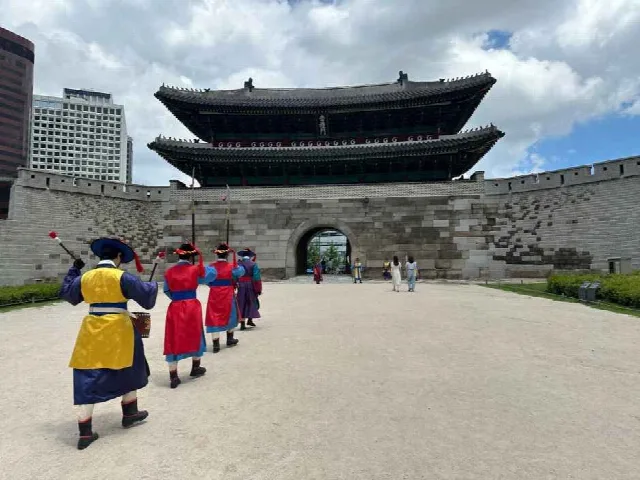 Great with this festival2026 Sungnyemun Gate Guard Ceremony
About
Sungnyemun is the main south gate of the Joseon-era city wall, located at Namdaemun-ro 4-ga, Jung-gu, Seoul. Because it stands in the south among the Four Great Gates, it is also called Namdaemun. It is a symbol of Seoul and the oldest surviving wooden building in Seoul, and was designated a National Treasure on December 20, 1962. It is the largest of Seoul's Four Great Gates, and is distinctive for its signboard written vertically. It was first built in the 5th year of King Taejo of Joseon (1396) and rebuilt in February 1398. It underwent a large-scale repair in the 10th year of King Seongjong (1479), and it escaped damage even in the Imjin War and the Second Manchu Invasion, serving for many years as the great gate of Hanseong. In 1907 it became a site of fighting when the Japanese forced the disbandment of the Korean army, and in the same year, when the Japanese crown prince visited Korea, the city wall connected to Sungnyemun was torn down on the pretext that the crown prince could not pass under the gate tower with his head bowed, a tragic part of its history. In 2006 the gate, left standing alone without its connected wall, was restored to recreate its original appearance. On February 10, 2008, a fire burned part of the first-floor gate tower and destroyed the second-floor gate tower. After recovery work and various studies for its restoration, a restoration ceremony was held on May 4, 2013, and it was reopened to the public. In the middle of a stone base built of high-stacked stones is a rainbow-shaped arched gate (hongyemun), and above it stands a two-story pavilion-style building five bays wide at the front and two bays deep at the side. Seen from the front, the roof has a trapezoidal shape, which is called a hipped roof (ujingak roof). It is in the dapo style, in which the bracket sets that support the eaves are placed not only on top of the columns but also between them; its form is not too curved and its construction is sturdy, showing the characteristics of the early Joseon period well. According to the Jibong Yuseol, Prince Yangnyeong, the eldest son of King Taejong, wrote the Sungnyemun plaque.
Visitor info
- Contact
- 02-779-8547
- Hours
- 09:00~18:00 (last admission 17:50)
- Closed
- Mondays
- Parking
- Not available
- Admission
- Free
- Restrooms
- Yes
Accessibility
How easy it is to get around with a wheelchair, stroller or for older visitors
- Access routeNo level differences up to the entrance; wheelchair accessible
- EntranceMain entrance has no level differences; wheelchair accessible
- Accessible restroomAccessible restroom available (next to the management office)
- Tactile pavingBraille blocks available (in front of facilities and in front of the main gate)
Directions
Sungnyemun Gate · Jung-gu, Seoul
 Naver Map
 KakaoMap
 TMAP
 Google Maps
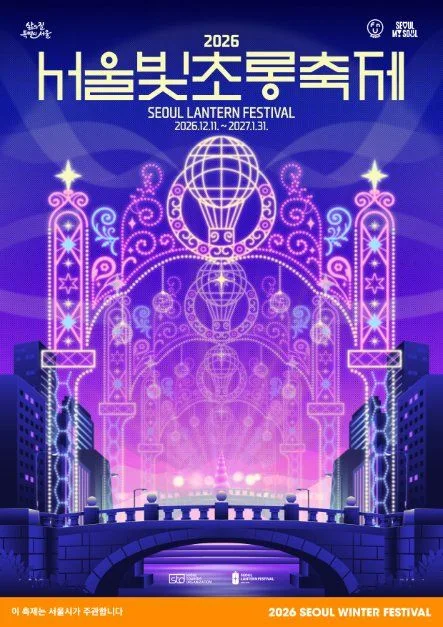
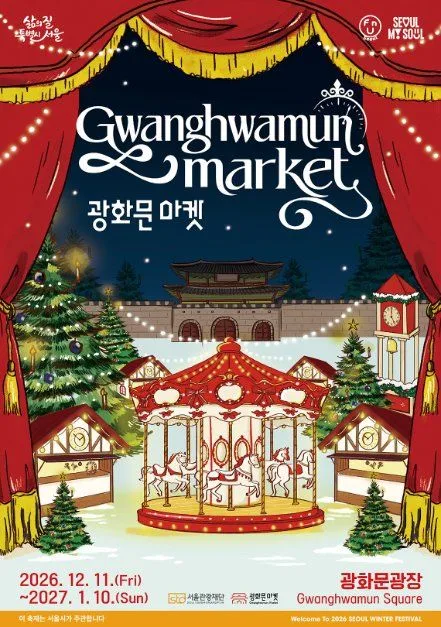
Festivals nearby
On now or coming soon · nearest first



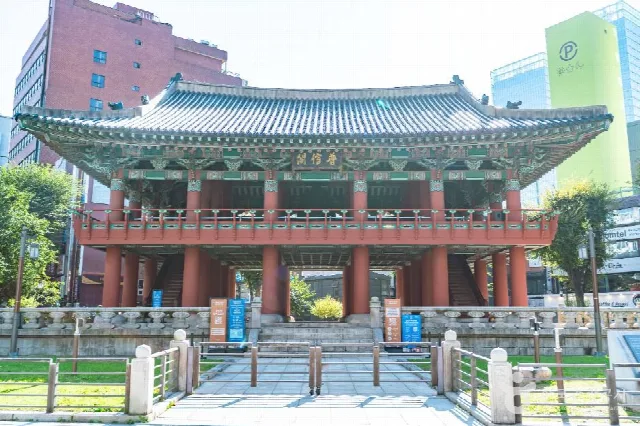


Sights nearby
Restaurants nearby
Stays nearby
Place info & photos: Korea Tourism Organization TourAPI · Barrier-free travel info (incl. KOGL Type 3) · Hours and prices may change, please check before visiting · Updated 2025.07.29