Eunjeoksa Temple (Gunsan)
Eunjeoksa Temple (Gunsan)
45.1km from Learning History Together (Yeoksarangke Baeurangke)
군산시 설림3길 49 (소룡동)
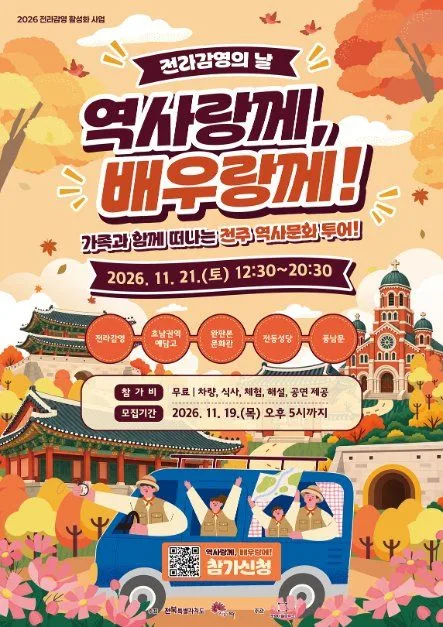 Great with this festivalLearning History Together (Yeoksarangke Baeurangke)
About
Eunjeoksa Temple is the oldest temple from the Baekje period among the temples in Jeonbuk State. Also once called Cheonbangsa and Seollimsa, Eunjeoksa is a branch temple of Geumsansa, the head temple of the 17th district of the Jogye Order of Korean Buddhism. Located on the slopes of Seollimsan Mountain in Soryong-dong, Gunsan, it is said to have been founded in 613 (the 14th year of King Mu of Baekje, the 35th year of King Jinpyeong of Silla) by the Silla monk Wongwang. It was then rebuilt four times: by National Preceptor Jeongjin in 952 (the 3rd year of King Gwangjong of Goryeo), a second time by the eminent monk Naong in 1373 (the 22nd year of King Gongmin), by Seon Master Bogyeong in 1781 (the 5th year of King Jeongjo), and by Seon Master Heoong in 1937. The current halls, including Daeungjeon and Geungnakjeon, were newly built in a large-scale reconstruction between 1985 and 1995. Earlier halls included Geungnakjeon, Myeongbujeon and Josajeon, and Daeungjeon in particular is 5 kan wide and 3 kan deep, with double eaves and multi-bracket (dapo) style. The Eunjeoksa Seated Wooden Sakyamuni Buddha Triad (Jeollabuk-do Tangible Cultural Heritage), enshrined in Daeungjeon, is a large seated wooden Buddha made by the monk Sujong in 1629 (the 7th year of King Injo), and shows the characteristics of late Joseon Buddhist statues well. It is said to have been moved from a temple near Geumsansa. In its arrangement, Sakyamuni Buddha is at the center, attended by the bodhisattvas Manjusri and Samantabhadra on the left and right. The principal Sakyamuni Buddha has excellent bodily proportions, with a solemn square face, a high nose bridge, broad shoulders, a balanced body and a stable knee posture, and the folds of the robe are beautifully expressed. The face is square, the nose bridge high, and the eyes and mouth are refined. Manjusri’s face is in the same style as the principal Buddha. On the head is a Chinese-style crown flaring upward, red on the upper part and gold on the lower part. It measures about 114 ㎝ in total height, 23 ㎝ in head height, 49 ㎝ in shoulder width, 71 ㎝ in knee width and 19 ㎝ in knee height. Samantabhadra’s face also has the same shape as Manjusri’s. Both bodhisattvas wear bracelets carved with flower patterns on their arms, but unusually, Samantabhadra’s left arm is exposed, and a decorative floral pattern is carved beneath the robe near the belly. It measures about 114 ㎝ in total height, 23 ㎝ in head height, 47 ㎝ in shoulder width, 72 ㎝ in knee width and 20 ㎝ in knee height. The principal Sakyamuni Buddha sits in the full lotus position on a simple wooden pedestal, making the earth-touching mudra, with a low ushnisha on a head of curled hair. It measures about 114 ㎝ in total height, 41 ㎝ in head height, 54 ㎝ in shoulder width, 78 ㎝ in knee width and 19 ㎝ in knee height. It preserves the typical characteristics of late Joseon Buddhist statues well. Behind the principal Buddha hang the Yeongsan Assembly painting as the main altar painting, with Avalokitesvara and guardian deity paintings on the left, and Seven Stars and Mountain Spirit paintings on the right.
Visitor info
- Contact
- 063-466-4526
- Hours
- 07:00~18:00
- Closed
- Open all year
- Parking
- Available
- Restrooms
- Yes
Directions
Eunjeoksa Temple (Gunsan) · Gunsan, Jeonbuk
 Naver Map
 KakaoMap
 TMAP
 Google Maps
Festivals nearby
On now or coming soon · nearest first

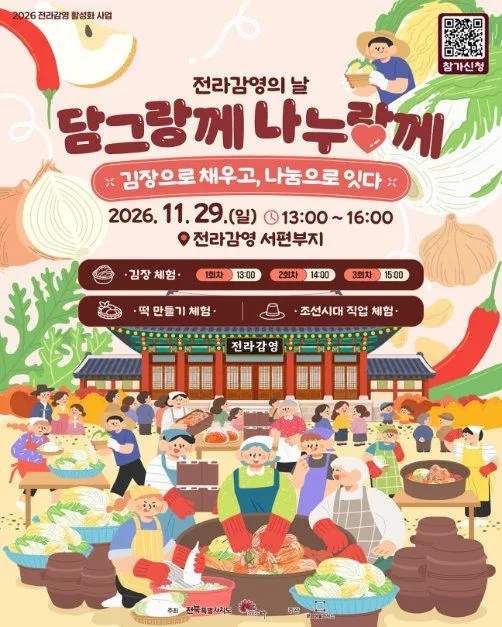
Sights nearby
Restaurants nearby
Stays nearby
Place info & photos: Korea Tourism Organization TourAPI (incl. KOGL Type 3) · Hours and prices may change, please check before visiting · Updated 2026.11.03